



Common Knee Pain Diagnoses
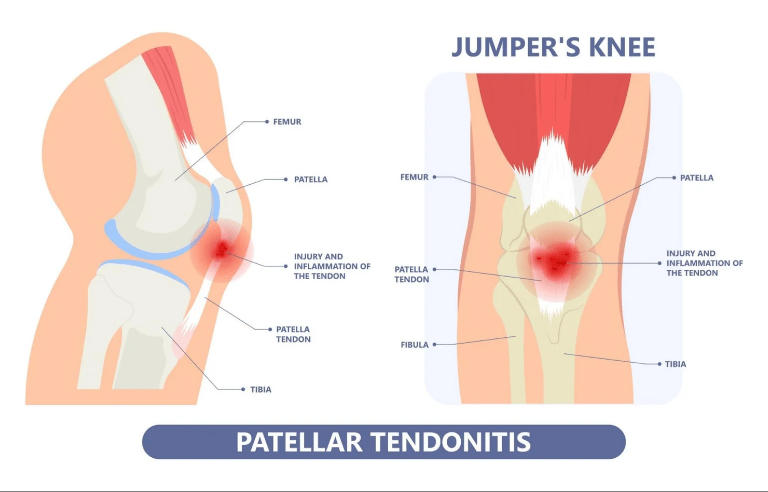
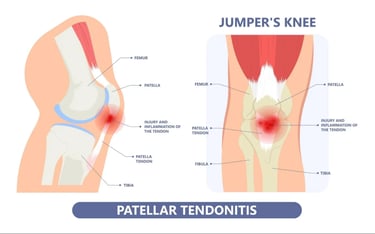
Jumper's Knee (Patellar Tendinopathy): This is a condition that often affects athletes who do a lot of jumping or rapid acceleration, such as basketball players and runners. Jumper's knee is an inflammation or irritation of the patellar tendon, which attaches the patella (kneecap) to the shinbone. This condition often causes pain just below the kneecap, especially when jumping or when standing up after sitting for a long time.
Patellofemoral Pain Syndrome (PFSS): This syndrome is one of the most common causes of knee pain, and often affects young adults and athletes. It involves pain around and behind the patella (kneecap), which can be aggravated by activities such as running, climbing stairs, or prolonged sitting. The pain can occur when the patella does not move smoothly over the surface of the femur, often due to poor alignment or weakness in the muscles around the knee.
Meniscal tear: The menisci are cartilage discs that act as shock absorbers in the knee. A meniscal tear can occur with sudden twisting, especially during sports. This can cause the knee to lock, causing pain and swelling.
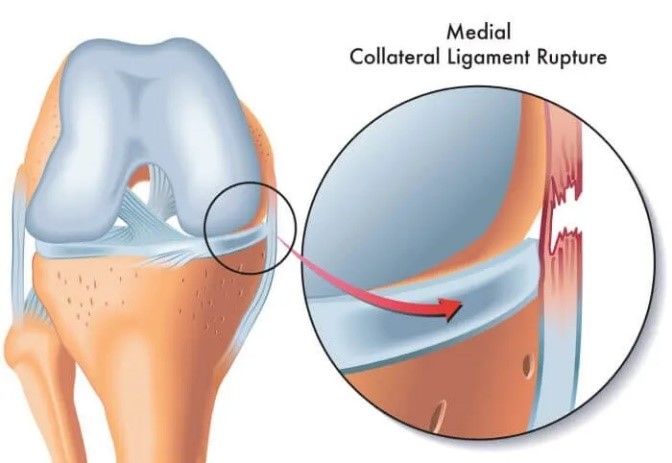
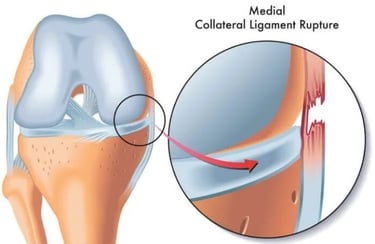
Cruciate ligament injuries: Injuries to the anterior or posterior cruciate ligament are common in sports such as football and skiing. Damage to the cruciate ligaments can cause the knee to become unstable and may require surgery to repair the injury.
Osteoarthritis: Wear and tear of the cartilage in the knee joint, especially in older people, can lead to pain and stiffness. Osteoarthritis can be the result of long-term strain or previous injuries to the knee.
To obtain an accurate diagnosis and find the best treatment, several diagnostic tools are used:
Clinical examination: The physiotherapist assesses the stability of the knee, range of motion and any pain points. This helps identify possible structural problems, such as patellofemoral pain syndrome or a torn meniscus.
X-ray: X-rays can be used to detect osteoarthritis, fractures, or serious structural problems in the knee joint.
MRI scan: MRI provides detailed information about soft tissues such as the meniscus, tendons, and muscles, and can be particularly helpful in diagnosing conditions such as a torn meniscus or patellofemoral pain syndrome.
Ultrasound: This technique is sometimes used to evaluate tendon and connective tissue injuries, such as jumper's knee.
Treatment of Knee Pain
Treatment depends on the specific diagnosis and severity of the pain. Common treatment methods include:
Physical therapy: Exercises to strengthen the muscles around the knee and improve stability can be very helpful for both jumper's knee and patellofemoral pain syndrome. Exercises that focus on the quadriceps (thigh muscles) and hip flexors are often key to improving knee function.
Medications: Painkillers and anti-inflammatory drugs, such as NSAIDs (e.g. ibuprofen), can be effective in reducing pain and inflammation.
Surgery: In the case of serious injuries, such as a meniscus tear or a serious cruciate ligament injury, surgery may be necessary. Arthroscopy is a common surgical procedure used to repair or remove damaged tissue in the knee.
In the link below you can find relevant exercises that can increase mobility and strength in the knee:
https://www.tiktok.com/@fullfit_fysio/video/7444247667581979926?_r=1&_t=ZN-8u57fOe0D6k
If you are unsure how to perform an exercise or whether the exercises are suitable for your condition, do not hesitate to contact and book an appointment with our physiotherapist.